Thursday, May 19, 2016

'Identity Lab Sessions, Istanbul', May 20-21, The Consulate General of Sweden and DEPO


---- Türkçe metin için lütfen aşağı ininiz-------

IdentityLab Sessions 

This two-day art event will bring artists and art professionals from Turkey and Sweden, who are interested in identity issues, together in Istanbul. These sessions are organized by maumau art residency (TR) and Verkstad konsthall (SE) and will take place at the Consulate General of Sweden, DEPO and Galata Greek Primary School on May 20th and 21st and provide a platform to talk about the relation between place and identity and its effect on different art practices. 

Participating Artists: Fikret Atay, Nancy Atakan, Hera Büyüktaşçıyan, Elmas Deniz, Işıl Eğrikavuk, Katarina Pirak Sikku, Liv Strand, Can Sungu, Lisa Torell, Ferhat Özgür 

Curators: Naz Cuguoğlu and Susanne Ewerlöf

*** The program will be in English

More information on IdentityLab Sessions:

Aiming to become a platform for discussion on these issues, the IdentityLab team invites artists and art professionals who represent different perspectives. This will give us the opportunity to talk about their personal experiences of ‘place’, its relation to their identities, and their feeling of belonging to various sites. We will also talk about the position of artists representing different minority groups in both Sweden and Turkey, and the role of the visiting artists addressing ‘place’ in unfamiliar locations.

These questions, which came out of the IdentityLab Project (www.identitylabproject.wordpress.com) were developed and carried out in Sweden and Turkey over the past six months. Through artistic research-based meetings with artists and art professionals and researchers in several locations, the IdentityLab team developed an interest in how the places we live in and/or have (not) visited plays into how we become who we are. In that sense, IdentityLab consists of both real and imaginary travels, including journeys we shared and not shared, and trips we hear about from others. It is also about being, existing wherever you are with both your mind and body, and experiencing a space’s atmosphere, contributing to it, owning it, and seeing your own function within it.

The team behind IdentityLab consists of the artists Liv Strand (SE) and Can Sungu (TR/DE), the curators Naz Cuguoğlu (TR) and Susanne Ewerlöf (SE). We think of IdentityLab as an experimental platform based on research and thought-sharing. We have so far had the chance to address these issues with artists in Stockholm, Jokkmokk, Norrköping (Sweden), Istanbul and Batman (Turkey). It is already clear that everybody has different ways of relating to a space; one’s relation to a site can change over life; an individual’s position in a community plays a part; small towns relate to the individual in another way than a city does; and belonging can come from knowing the social rules that construct a site just as much as knowing people.

The project is formed under the context of Tandem Cultural Managers Exchange Turkey European Union and we are able to do the IdentityLab Sessions with kind support from The Swedish Institute and in close collaboration with the Consulate General of Sweden, DEPO and The Galata Greek Primary School. The team has previously conducted research trips and a public seminar in Sweden and are truly grateful to all people encountered on the way. We were able to host the two-day seminar “Exchanging Notes Part I” in Norrköping through kind support from Iaspis - the Swedish Arts Grants Committee's International Programme for Visual and Applied Artists.

Please come and join us for IdentityLab Sessions to think, share and address place and identity from your point of view!

Program:

May 20th @ the Consulate General of Sweden
11.00-15.00 Subject to Erring: A workshop for artists led by Liv Strand
Participants: Fikret Atay, Nancy Atakan, Hera Büyüktaşçıyan, Elmas Deniz, Işıl Eğrikavuk, Katarina Pirak Sikku, Liv Strand, Can Sungu, Lisa Torell, Ferhat Özgür, Joana Kohen, Hasan Özgür Top, Ceren Saner
*By invitation only

May 20th @ DEPO
19.00 Introduction to the IdentityLab Sessions by Naz Cuguoğlu and Susanne Ewerlöf
19.20 Artist Talk by Katarina Pirak Sikku
20.00 Neighbor Think, performance by Liv Strand
20.30 Performance by Işıl Eğrikavuk
21.00 Outdoor performance Figure 2224 by Lisa Torell

May 21th @ Galata Greek Primary School
14.00 Introduction to IdentityLab Sessions and Galata Greek Primary School
14.30 Can Sungu presents his work Replaying Home and shows an excerpt of the video
15.00-16.15 To Make Place video screening and Q&A
Artists: Lisa Torell, Fikret Atay, Elmas Deniz, Ferhat Özgür, Nancy Atakan
16.15-16.30 Coffee Break
16.30-18.30 Panel discussion
Participants: Hera Büyüktaşçıyan, Ferhat Özgür, Lisa Torell, Can Sungu and Liv Strand

For more information about the artists:
Fikret Atay: http://www.pilotgaleri.com/artists/detail/14
Nancy Atakan: http://www.nancyatakan.com/
Hera Büyüktaşçıyan: http://herabuyuktascian.blogspot.com.tr/
Elmas Deniz: www.elmasdeniz.com
Işıl Eğrikavuk: www.isilegrikavuk.net
Katarina Pirak Sikku
Liv Strand: www.livstrand.com
Can Sungu: www.cansungu.com
Lisa Torell: www.lisatorell.com
Ferhat Özgür: http://www.ferhatozgur.com/

Naz Cuguoğlu is a curator and art writer, based in Istanbul. She is the co-founder of non-profit art initiative “Creative Çukurcuma” and artistic research project “IdentityLab” (SE & TR); member of Proto5533 curator team; and works as program manager at Gallery Zilberman (Istanbul & Berlin). She writes art critique for various online and published art magazines. She took part in CerCCa art residency in Spain. She received her BA in Psychology and MA in Social Psychology at Koç University focusing on cultural studies.

Susanne Ewerlöf (b. 1981) is interested in cultural heritage, identity and the politics of memory which she is currently exploring in the research projects Becoming by Recalling and IdentityLab (TR/SE). She works as a Curator in Stockholm, is the Founding Director of Verkstad konsthall in Norrköping, Sweden and a boardmember of Norrköping Air. She has a MA in Culture and Media Production from Linköping University and has studied Art History and Contemporary Art Curating at Stockholm University. www.susanneewerlof.se

Addresses:
the Consulate General of Sweden: Istiklal Caddesi 247 (Tünel), Beyoğlu
DEPO: Tütün Deposu Lüleci Hendek Caddesi No. 12 Tophane 
Galata Greek Primary School: Hacımimi Mah. Kemeraltı Cad. No. 25

Special thanks to: Suzi Erşahin, Andrea Karlsson, Serra Özhan Yüksel, Sine Ergün, Asena Günal, Serhat Cacekli, Moiz Zilberman, Hera Büyüktaşçıyan, Erik Månsson, Sheena Malone, Damla Kılıçkıran, Ayşegül Papila

More information:
https://identitylabproject.wordpress.com/
www.verkstadkonst.se

------------------------------------------------------------------

IdentityLab Sessions

İki gün sürecek olan bu sanat etkinliği kimlik konuları üzerine çalışan, Türkiye ve İsveç’ten sanatçıları bir araya getirecek. Kimlik ve mekan arasındaki ilişki ve bu ilişkinin çeşitli sanat pratikleri üzerindeki etkisine odaklanacak olan etkinlik 20-21 Mayıs tarihlerinde İsveç Konsolosluğu, DEPO ve Galata Rum Okulu’nda gerçekleşecek.

Katılımcı sanatçılar: Fikret Atay, Nancy Atakan, Hera Büyüktaşçıyan, Elmas Deniz, Işıl Eğrikavuk, Katarina Pirak Sikku, Liv Strand, Can Sungu, Lisa Torell, ve Ferhat Özgür

Küratörler: Naz Cuguoğlu ve Susanne Ewerlöf

*** Etkinlik dili İngilizce’dir

IdentityLab Sessions hakkında daha fazla bilgi:

Kimlik konusu üzerine bir paylaşım platformu olmayı amaçlayan IdentityLab ekibi farklı bakış açılarına sahip sanatçıları ve sanat profesyonellerini bir araya getiriyor. ‘Mekan’ üzerine kişisel düşünceler, bu düşüncelerin kimlikle olan ilişkisi ve farklı mekanlarda hissedilen aidiyet üzerine bir alan yaratıyor. Ayrıca İsveç ve Türkiye’den farklı azınlık gruplarını temsil eden ve alışılmadık mekanları ziyaret eden sanatçıların toplumdaki rolüne dair bir tartışma ortamı yaratmayı amaçlıyor.

Bu sorular, IdentityLab ekibinin geçtiğimiz altı ay süre zarfında İsveç ve Türkiye’de gerçekleştirdiği araştırma seyahatleri sonucunda ortaya çıktı. Farklı mekanlardaki sanatçı, sanat profesyoneli ve araştırmacılarla sanatsal araştırma odaklı buluşmalar gerçekleştiren IdentityLab ekibi, içerisinde yaşadığımız ve/veya ziyaret ettiğimiz ya da etmediğimiz mekanların kimliğimize etkisi konusuna eğildi. Bu bağlamda, IdentityLab gerçek ve hayali yolculukları, beraber gerçekleştirilen ve gerçekleştirilmeyen ziyaretleri ve başkalarından duyulan seyahatleri kapsamaktadır. Aynı zamanda, bulunulan mekanda hem zihnen hem de bedenen var olabilmek , bir mekanın atmosferini deneyimlemek, ona katkıda bulunmak, sahip olmak ve birey olarak içerisindeki fonksiyonumuzu anlamaya dairdir.

IdentityLab ekibi, sanatçı Liv Strand ve Can Sungu ve küratör Naz Cuguoğlu ve Susanne Ewerlöf’ten oluşmaktadır. Biz IdentityLab’i araştırma ve düşünce paylaşımı odaklı deneysel bir platform olarak görüyoruz ve bu zamana kadar bu konuları Stockholm, Jokkmokk, Norrköping (İsveç), İstanbul ve Batman (Türkiye)’dan sanatçılarla paylaşma imkanına sahip olduk. Bu süreç içerisinde fark ettiğimiz ve paylaşmak istediğimiz bazı noktalar oldu: Her bireyin mekanla ilişki kurma şekli birbirinden çok farklı; bireyin mekanla olan ilişkisi zaman içerisinde değişebilir; bireyin toplum içerisindeki pozisyonu bu konuda etkili olabilir; küçük kasabaların bireye etki etme şekli büyük kentlerden çok farklı hissedilebilir; ve aidiyet topluluğu tanımak kadar o mekanı tanımlayan sosyal kuralları öğrenmeye de dairdir.

IdentityLab, bir Tandem Kültür Yöneticileri Değişimi Türkiye Avrupa Birliği projesidir. IdentityLab Sessions, Swedish Institute fonu kapsamında ve İsveç Konsolosluğu, DEPO ve Galata Rum Okulu ile yakın işbirlği içerisinde hayata geçmektedir. Norrköping’de gerçekleşmiş olan iki günlük seminer “Exchanging Notes Part I” Iaspis’in desteğiyle hayata geçmiştir. İsveç’te araştırma seyahatlari ve bir seminer gerçekleştirmiş olan ekip, yolda karşılaştığı herkese teşekkürü bir borç bilir.

Program:

20 Mayıs @ İsveç Konsolosluğu
11.00-15.00 Subject to Erring: Liv Strand’ın yöneteceği, sanatçılar için atölye çalışması
Katılımcılar: Fikret Atay, Nancy Atakan, Hera Büyüktaşçıyan, Elmas Deniz, Işıl Eğrikavuk, Katarina Pirak Sikku, Liv Strand, Can Sungu, Lisa Torell, Ferhat Özgür, Joana Kohen, Hasan Özgür Top, Ceren Saner
*Katılım sadece davet üzerine

20 Mayıs @ DEPO
19.00 IdentityLab Sunumu - Naz Cuguoğlu ve Susanne Ewerlöf
19.20 Sanatçı Konuşması - Katarina Pirak Sikku
20.00 Neighbor Think, Performans - Liv Strand
20.30 Performans - Işıl Eğrikavuk
21.00 Figure 2224, Performans - Lisa Torell

21 Mayıs @ Galata Rum Okulu
14.00 IdentityLab Sessions ve Galata Rum Okulu Sunumu
14.30 Sanatçı Konuşması - Can Sungu
15.00-16.15 “To Make Place” Video Gösterimi ve Soru & Cevap
Sanatçılar: Lisa Torell, Fikret Atay, Elmas Deniz, Ferhat Özgür, Nancy Atakan
16.15-16.30 Kahve Arası
16.30-18.30 Sohbet
Katılımcılar: Hera Büyüktaşçıyan, Ferhat Özgür, Lisa Torell, Can Sungu ve Liv Strand

Teşekkürler: Suzi Erşahin, Andrea Karlsson, Serra Özhan Yüksel, Sine Ergün, Asena Günal, Serhat Cacekli, Moiz Zilberman, Hera Büyüktaşçıyan, Erik Månsson, Sheena Malone, Damla Kılıçkıran, Ayşegül Papila

Tuesday, May 10, 2016

'boom bang 3", northampton contemporary-uk, 11 May-26 June 2016


Boom Bang III

  • Date: 
    11 May–25 June 2016
Artists: Alena Tereshko, Ana Jikia, Chicks on Speed, Damir Očko, Emily Bates, Erdal Inci, Eglė Naujokaitytė-Muk & Pozeminiai Taskai, Farhad Farzali, Ferhat Özgür, Jelena Juresa, Olaf Breuning, Styrmir Örn Guðmundsson & David Bernstein, Su-Mei Tse
NN’s alternative Eurovision returns with it’s third edition of artists’ works from across the European Broadcast Area. Each year Boom Bang takes a slightly different format and this installment has invited selectors from across the EBA to pick artists for the project. The selectors are Jasmina Cibic (Slovenia), Virginija Januškevičiūtė (Lithuania), Filip Markiewicz (Luxembourg) and Katharina Stadler (Austria).
Each of the works involved music and moving image in its broadest sense with artists from Iceland, Turkey, Russia, Norway and more. The screening programme will visit Lithuania, Georgia and other locations after debuting at NN.

Events:

From Art To Commerce
Wednesday 4 May 2016, 7–9pm / Your brand – writing a narrative for your work
Wednesday 1 June 2016, 7–9pm / Getting started – funding routes
These informal sessions cover a range of issues for people looking to develop a business from their creative practice. The sessions start with a 1 hour workshop followed by 1–2–1 support and/or group discussion. From Art to Commerce is led by NN’s Development Director Tracey Clarke. For further information contact Tracey at Tracey@NNContemporaryArt.org.
Book your free place here.
Eurovision Live Broadcast
Saturday 14 May 2016, 7pm at the Errol Flynn Filmhouse
Boom Bang III has teamed up with the Errol Flynn Filmhouse once again to celebrate Eurovision! Join in at the EFF for a night of cheesy splendour including sing-a-longs, themed snacks and more in tribute to all things Euro-tastic. Represent your favourite country by dressing up in your most OTT outfit and bringing flags and banners, culminating in the chance to watch the all important competition on the big screen. While you wait to find out who is voted this year’s winner, we will provide scorecards so you can pick your own.
Further fun and games will be had during the event with  a fancy dress competition and as themed food and drink are served. With a playlist of past Euro-hits and misses, videos and competitions, we are sure you won’t give this night nul points!
Admission to the Eurovision Celebration costs £13 which includes entry, themed food and drink and more. Doors open at 7pm – the BBC coverage live from Stockholm will begin at 8pm.
Suitable for ages 18 and above.
Book your ticket here.
Eurovision ChallengeSaturday 21 May 2014, 2–4pm
YOU can be a part of the EUROVISION CHALLENGE
THE CHALLENGE: Can Oz workshop wizard Graeme Leak express-skill a group of willing strangers to be Eurovision ready in just under two hours? Join in and find out! You will sing, stomp and play junk percussion under Graeme’s expert guidance.
HOW IT WILL WORK: We will identify the key ingredients of classic EV songs then create, rehearse and perform our own version from scratch. Graeme will use every workshop trick in the book to quickly generate VERSES, CHORUSES, GROOVES, HARMONIES into a kick-arse ARRANGEMENT (including the all important KEY CHANGE). Then we’ll RECORD it and be an overnight YouTube SENSATION.
Book a free place here.
Bumps and BabesThursday 26 May 2016, 2–3pm
If you are pregnant or have a baby or pre-schooler, come to NN to see the exhibition with your bump or babe and meet others for coffee and finger painting. Wear clothes to get messy in!
Book a free place here.
Crit Group
Saturday 28 May 2016, 2–3pm
NN hosts the Crit Group for artists at all stages of their career to come together to discuss their work in progress led by artist Sayed Sattar Hasan. This Crit Group will begin with Featured Artists who will present short introductions to their practice followed by Q&A.
Book your free place here.
Mono Print: Glass
Wednesday 1 June 2016
Session 1: 1.00-2.30 (8-15yrs)
Session 2: 3.00-5.00 (16yrs+)
This mono-printing workshop uses a collection of glass, transparent and reflective objects as subject matter, which participants will formally arrange as still life, both as a group central composition and as a collection of individual tabletop studies.
No experience of mono-printing is necessary as participants will be supported and encouraged through this simple but expressive printing process in order to explore reflection and transparency through observational experience.
Price £3 children £5 adults. Book your place here or at the Gallery desk.
Still Light
Thursday 2 June 2016
Session 1: 1.00-2.30 (8-15yrs)
Session 2: 3.00-5.00 (16yrs+)
This workshop focuses on dramatic and specific lighting deployed in the tradition of still life. Objects and reflective surfaces will be arranged to emphasis light and shadow, reflection and tone by using lamps, candles and torches. The aim is to interrogate, play, test and research notions of light, positive and negative, projections, atmosphere and the nature of light on surface through this experimental laboratory approach.
Though this is a drawing and collage workshop, participants are encouraged to bring along any other personal equipment i.e. camera, phones, ipads etc in order to explore an individual approach through a mixed methodology i.e. drawing, photography and videos.
Price FREE. Book your place here or at the Gallery desk.
Stilled Lives: Drawing Owls
Friday 3 June 2016
Session 1: 1.00-2.30 (8-15yrs)
Session 2: 3.00-5.00 (16yrs+)
Local owl rescuer and handler Tony Hewitt will bring some of his owls to NN’s courtyard. The birds will be the subjects for two observational drawing workshops using a variety of different drawing materials.
No experience necessary as this is a workshop to explore an unusual and fascinating subject with the emphasis on exploring a personal drawing language with an artist on hand to suggest ways in which to get started. All materials supplied but feel free to bring your cameras and any other media, sketchbooks etc.
Price £5 children £8 adults. Book your place here or at the Gallery desk.
Casting
Saturday 4 June 2016
Session 1: 12:30-2.30 (8-15yrs)
Session 2: 3.00-5.00 (16yrs+)
Casting is an exploratory workshop using plaster to cast small objects and sculptural forms. We will use simple materials to invent moulds i.e. acetate, recycled materials, packaging, etc.
The emphasis will be on experimentation with a playful engagement to mould making and the surprise objects that come from them. All materials will be provided but please wear something to get messy in and wear covered, old footwear.
Price £5 children £10 adults. Book your place here or at the Gallery desk.

Tuesday, April 19, 2016

Ferhat Özgür’le çağdaş sanatın bugünü üzerine, sol haber portalı, 19 Nisan 2016

Ferhat Özgür’le çağdaş sanatın bugünü üzerine

Çerçeve
 
19/04/2016 Salı
1965 yılında Ankara’da doğan Ferhat Özgür uzun yıllar Hacettepe Üniversitesi’nde öğretim üyesi olarak çalıştıktan sonra İstanbul Kültür Üniversitesi’nde akademik kariyerine devam etti. Şu an Yeditepe Üniversitesi Sanat Yönetimi Bölüm Başkanı olan Ferhat Özgür, özellikle 2000’lerden bu yana dünyanın birçok yerinde ve önemli merkezlerde sergiler açtı. MoMA'da ya da Berlin Bienali'nde olduğu gibi bir çok solo ve grup sergi projelerinde yer alan Özgür video, fotoğraf, kağıt işler dahil birçok farklı mecrada işler üretiyor. Ferhat Özgür’le Çağdaş Sanat’ın politik, sosyal ve ekonomik cepheleri üzerine bir söyleşi gerçekleştirdik. 
Çerçeve: Ferhat Özgür’ün genelde sanata bakışı nasıl özetlenebilir? Hem özelde bakışını hem de genelde var olan panoramayı nasıl gördüğünü merak etmekteyiz?
Ferhat Özgür: Özellikle 7 Haziran 2015 seçimlerinden bu yana yaşamakta olduğumuz terör saldırıları, süre giden korku, tedirginlik ve ümitsizlik ortamında hala sanata ve onun bir şeyleri değiştirebileceğine ilişkin inancımı korumak istiyorum. Son 10 yıldır hissedilebilir bir paranoya çöktü üzerimize. İlkini 2010 yılında yaşadığımız Tophane saldırılarından sonra uygarlık değerlerinin tutucu mahalle baskıları çerçevesine sıkıştırıldığı, sanat ve kültürel dinamiklerin ‘ahlak’ ile ilişkilendirildiği bir sürece girdik. Kadına yönelik cinayet ve şiddet olaylarının her geçen gün artması ve en son tanık olduğumuz çocuklara yönelik cinsel istismar suçlarının örtbas edilmesi, Reza Zarrab’ın tutuklanması gibi gerçekler, söz konusu ‘ahlak’ tanımından da kimlerin neler anladığını kanıtlamış oldu. Sanatsal yaklaşımım siyasal ve toplumsal gerçekler doğrultusunda şekilleniyor haliyle. Geriye dönüp baktığımda kadınların ve kadın sorunsalının başrolde olduğu işlerin öne çıktığını görüyorum. Bu çocukluğumuzu geçirdiğimiz Ankara’nın Altındağ bölgesinde, ezilen ama sonunda direnerek kazanan kadınlara fazlasıyla şahit olmamızdan gelen otobiyografik deneyimlerle de ilişkilendirilebilecek bir durumdan kaynaklanıyor olmalı.
Çerçeve: Erken dönem çalışmalarından bu yana izleyici seni, dolaylı ya da bazen direkt olarak “politik” içerimli işlerinle tanıyor. Tarihin ışığında, bugün çağdaş sanat ve siyaset arasındaki ilişkiyi nasıl görüyorsun?  
Ferhat Özgür: Çağdaş sanat dediğimizde koca bir olguyla karşı karşıyayız. Tarihsel çerçevede sanatın siyasi olarak angaje olduğu sayısız durumlar buraya sığmayacak kadar geniş bir konu. Paris Komünü’ne katıldığı için 1871’de 6 ay hapis yatan Realizm’in kurucusu Courbet, özellikle Arupa’daki 1848 devriminden sonra sanatı resmen politik bir silah olarak gören Honore Daumier, Bürger’ci perspektiften bakıldığında tarihsel avangardın tümü hemen akla gelenler. Bugün çağdaş sanat ile siyaset arasındaki ilişkinin önünde kendisinin de karşı koyamadığı büyük bir engel var, o da eğlence kültürü ve neredeyse hiçbirinin temiz bir geçmişinin olmadığı sermaye sektörü. Aykırı seslerin bu iki olgu tarafından serimlenip meşrulaştırılması kaçınılmaz oldu artık. Çağdaş sanatın bu kirli ilişkilerin aklandığı arenadan başka kendine bir yer bulma olanağı yok. Bu noktada tek çıkar yol kalıyor, sözünüzü içerden her şeye rağmen söylemek ve verili fırsatları onların sizden istediği yöne çevirmemek. Politik içerikli işlerimde bu yönde hareket etmeye çalışıyorum.
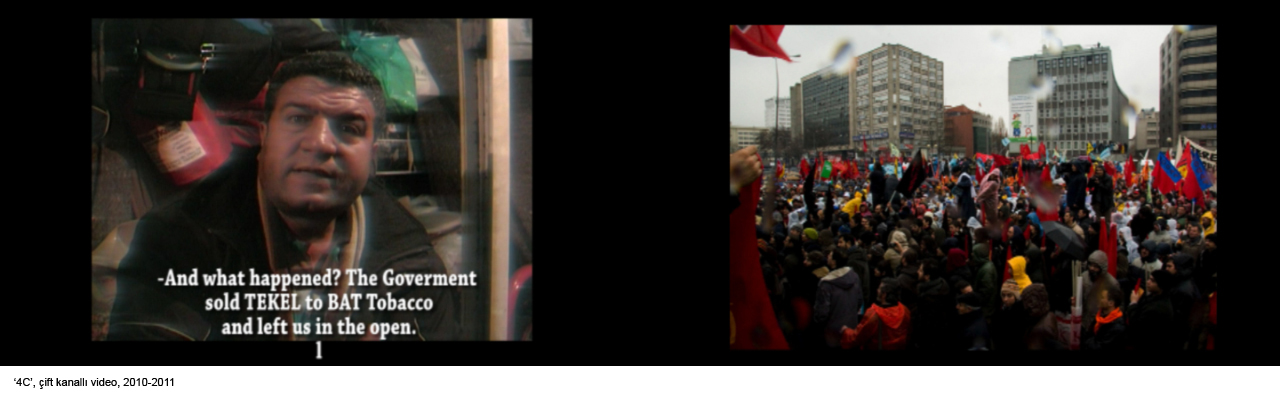
Çerçeve: Tekel işçilerinin efsanevi direnişlerinden, gençlik-yaşlılık olgusuna, Mitolojiden, aile ilişkilerine, kimlikten cinsiyete farklı konulara eğilen bir yaklaşımın var. Yer yer  belirli bir konuya saplanıp kalan çağdaş sanatın açmazını/açmazlarını nerelerde görüyorsun? Sence problem bu bağlamda nerede?
Ferhat Özgür: Tate Modern’de Gerhard Richter ile yapılan bir söyleşinin filmi gösteriliyordu. Küratör Nicholas Serota şöyle sormuştu kendisine: ‘Aynı anda hem foto gerçekçi hem de tamamen soyut resimler yapıyorsun, sence bu bir çelişki değil mi?’ Richer, ‘Bu iki deneyimi birden yaşamak çok ilginç benim için, soyutta kendimi bırakıyorum, gerçekçilikte ise disipline oluyorum’ demişti. Meseleyi bu kadar basit ortaya koymuştu. Yani adeta ‘canım öyle istiyor abi’ demek istiyordu. Oysa Richer’in bu çelişkili yaklaşımına düzinelerce zorlama teoriler üretilmişti. Benzer teoriler geçmişte Kübizm’i atomun parçalanmasıyla ilişkilendirerek yapılmıştı. Bize de eğitimimizde hep öyle söylenegeldi. Tek bir tema, tek bir üslup, kalabalıkta bir bakışta tanınabileceğiniz bir dilinizin olması. Bunlar tutarlılıkla özdeşleştirilmişti. Sanat eleştirisi de kendini bu tutarlılık üzerine kuruyordu zaten. Böylesi de mümkün olabilir tabii ki, ancak tutarlılık piyasa değeri açısından dayatılan yapay bir olgudur. Sanatçının içinde olan bitenle ilgisi yoktur. İnsan tutarlı olacağım diye formüle etmez kendini. Üslup dediğiniz şey bir sanatçının bütün bir hayatına yayılan çelişkiler toplamıdır. Ben başından beri kalabalıkta kaybolmayı seçtim. Bana da desen ve kağıt üzerine çalışmalarımla video ve fotoğraflarım arasındaki ilişki sürekli sorulmuştur. Artık söylemekte yalnız olmadığım bir yanıtım var; ‘canım öyle istiyor abi’. Bu özgürlüğün tadını çıkarmaktan daha güzel bir şey olamaz. Gençlere de önerim budur; üsluba takılmayın, kendinize sürekli yeni dönemeçler yaratın.
Çerçeve: Bugün Türkiye’de Çağdaş Sanatın başat konuları arasında kentsel dönüşüm ve soylulaştırma projeleri geliyor. Bu içeriğe sahip işlerin yer aldığı bienaller ya da büyük sergilerdeki sponsorlara bakıyorsun, insanın aklına “kentsel dönüşümü, soylulaştırma projesi üreten bir şirket destekli” etkinlikte nasıl tartışacağız sorusu geliyor. Ya da ekoloji ve sanat arasındaki ilişkiyi sorgulayan bir sergiye bakıyorsun, sponsorlar arasında HES ortağı olan Şekerbank ve gayrimenkul şirketi bulunan Eczacıbaşı’nı görüyorsun. Çağımızdaki “medyatik de olan” bu ikili yapıyı nasıl değerlendiriyorsun?
Ferhat Özgür: Yukarıda da değindiğim gibi bütün büyük sergilerin başına gelen bir şey bu. Benim gördüğüm şu: Sen bahsettiğin meselelerle ilgili olarak bağımsız, kendi bütçenle bir iş yapıyorsun. Gidişata yönelik tepkini bir sanatçı sorumluluğu olarak gösteriyorsun. Burada tamamen saf ve kendinlesin. Sonra kent ya da sansür temalı bir sergi daveti alıyorsun, bir bakıyorsun ki o etkinliğin arkasında HES’ler vs’ler çıkıyor. İstanbul Modern’in duvarında Egemen Bağış’ın ismi var. Liberate Tate hareketi çerçevesindeki protestolar, British Petrol’ün Tate sponsorluğundan çıkmasına neden oldu. Yakın geçmişte Volkswagen’in emisyon skandalını düşünün. Ya da Unilever’den sonra Tate Modern’in Turbine Hall projelerinin sponsorluğunu üstlenen Hyundai’yi. Yarın bir gün ondan da bir skandal çıkmayacağını kim garanti edebilir? Kimsenin masum ve temiz olmadığı bir şirketler ağı içinde vuku buluyor çağdaş sanat. Size naifçe gelebilir ama hemen hemen herkes de bu büyük sergilerin içinde, bu yüksek sosyete içinde görünmek, tadını çıkarmak ve orada olmayanlara hava atmak istiyor. Bu ortamlar biraz hava atma platformlarına döndü zaten. Hepimizin katıldığı kurumsal sergilerin sahiplerinin mutlaka vukuatları vardır.  Tümden bir reddediş ve geri çekilme mümkün mü bilemiyorum, ancak mevcut yapı içinde ne kadar radikal olunabilir onu da bilemiyorum. Bütün bunlar bizi sesi kısılmış bir politik sanat yapmaya itiyor olabilir, bunu itiraf etmemiz lazım.
Çerçeve: Hem eğitmen hem sanatçı hem de küratör kimliğini kapsayacak bir soru sormak isteriz. Türkiye’de sanat denildiğinde aslında İstanbul’da sanatı ya da sanat denildiğinde merkezde olan tanımlanıyor çoğu kez. Bu merkez-çevre ilişkisinin sıkışıp, kalmasının nedenleri ve sonuçları neler sence? Ve buradan çıkışı, sanatı coğrafyanın belirli kodlanan alanlarına değil de, her yere ve her yaşama/yaşam alanına nüfuzunu olası kılabilecek eylemler ne olabilir sence?
Ferhat Özgür: Ben de sonunda bu merkez denen yere gelmek zorunda kaldım. Bunun hem bu bahsettiğin olaylara bağlı duygusal gerekçeleri vardı, hem de İstanbul’un yurt dışı uçuşlarında ilk ve son durak oluşu. Ankara aktarmalı uçuşlardan o kadar bezmiştim ki buraya gelmek son çare oldu. Tüm emeklilik haklarımı vs. yakarak verdim bu kararı. Haliyle çevreden gelen bir sanatçı ve akademisyen olarak çift yönlü gözlemlere sahibim. Çevre sanatçıları için hala merkezde görünürlük ve kabul görmek birinci hedef olarak duruyor. Ancak son 5-6 yılda böylesi bir ayrım kırıldı. Artık tek bir yerin ve belli küratörlerin hegemonyası yok. Üretim açısından dinginlenemez biçimde merkez dışı hareketler devam ediyor ve güçleniyor. Ama uluslararası ilişkiler açısından İstanbul gelmesi gitmesi kolay olması anlamında hala fiziki bir merkez. Küratör kimliğimi zorunluluklar çerçevesinde yapıyorum, niyetim asla bir küratör olmak olmadı. Ankara’da kendi kendimizi nasıl var edebilirizdi temel soru. Oradaki olanakları kullanabildiğimiz kadar kullanıyorduk. Sanatı coğrafi kodların sıkışmışlığından kurtarmanın en keskin yolu, orada kapsamlı hamleler yapabilmektir. Mardin Bienali, Çanakkale ve Sinopale güçlü ve nitelikli sanatçılarla bunu başarmış durumda. Tabii ki hepsinin eksiklikleri, tartışıldıkları noktalar var ama orada yaşayan sanatçılar için bir güven kaynağı olmuş durumda. Ben Anadolu üniversitelerinden gelen her tür jüri üyeliği, panel katılımı ve sanatçı konuşma davetlerini zamanım el verdiği ölçüde kabul ediyorum, çünkü bunları da bir tür sanatsal sorumluluk projeleri olarak görüyorum. Bu katılımların karşılıklı birbirimizi dönüştürücü güçleri olduğuna inanıyorum.
Çerçeve: Özellikle plastik sanatlar alanında yaşanan gerici saldırılar hakkında neler söyleyebilirsin?  Bu saldırılara karşı topyekün bir direncin plastik sanatlarda olmadığına, belli noktalarda ya da bir takım icraatlar karşısında sanatçılar tepki gösterseler de, bunun hiçbir zaman ideolojik bir mücadeleye ya da bir aydınlanma mücadelesine dönüşmediğine, bu noktada sanatçının durduğu yerin ne olması ve kendini nasıl konumlandırması gerektiğine dair neler söyleyebilirsin?  
Ferhat Özgür: Ne yazık ki gerici saldırılar karşısında hala topyekün bir ses çıkaramıyoruz. İtiraf edelim ki korkuyoruz. Hiç olmadığı kadar baskıcı, tehdit edici ve ayrıştırıcı bir iktidar söylemiyle oluşturulan bir ortam bu. Son akademisyenler bildirgesinde bu görüldü. Üzerinde çalışılan yeni terör yasası -eğer geçerlik kazanırsa- bu baskı ve korku ortamı daha da artacak. Gerici fiziksel saldırılara karşı bizim de ortak bir kalkan oluşturmamız gerekiyor, aksi halde birbirimize küser, entelektüel kindarlık güder, yanlış anlamalara bağlı sorunlarımızı çözmeden ön yargılarımızla birbirimizi boğazlamaya devam edersek başımıza gelecek her şeyden tek tek sorumluyuz demektir. Layık olduğumuz bir yönetim biçimini belirleyeceğimiz ortak ideolojik duruşu sandık başında göstermekten başka çare de yok.
Çerçeve: Ancak bugüne kadar AKP'nin sandıkta kazandığına tanık olduk. Çünkü aslında sandık tek başına hiçbir zaman özgür olamıyor. Sandık paranın, medyanın, kamuoyu "araştırmalarının", velhasıl düzenin kuşatması altında kuruluyor. Sandıkları bile özgürleştirecek olan halkın hakkını araması, kaderini eline alması değil midir? Yakın tarihimizde, 2013 Haziran Direnişinde gördüğümüz gibi…
Ferhat Özgür: Tamamen öyle. Gerçek özgürlüğün ve demokrasinin, sandıkların da özgürleştirildiği bir ortamda geleceği su götürmez bir gerçek. Onlarca kez yazıldı çizildi, Her türlü manipülasyona açık lisansız bir SEÇSIS yazılım programından çıkan son seçim sonucunun gerçekliğine nasıl inanacağız? Bu kadar travmadan ve can kaybından ardından gelen seçim sonucunda gördüğüm manzara bende simülatif bir gerçeklik içinde yaşıyormuşuz izlenimi oluşturdu. Artık görüp yaşadıklarımıza inanmakta zorluk çekiyorum. Haziran Direnişi'nden sonra sol ve demokrasi isteyen cenahın birden bire bu kadar yalnızlaşacağına ve oy kaybına uğramış olacağına inanamıyorum. O yüzden sandığa güvenmek her zaman şüpheli bir durum.
Çerçeve: Son olarak, örgütlü cehalet aracılığıyla sömürü, yalan, baskı sisteminin genişletilmesine, diğer bir deyişle “çoğunluğun seçimi, herkesin seçimidir” biçimindeki örtük faşizme karşı, özelde kültür ve sanatta, genelde sosyal ve politik bağlamda neler yapılabilir? 
Ferhat Özgür: Çoğunluğun seçimi kazananın seçimidir ancak herkesin değil. Demokrasi işte tam da o noktada kaybeden azınlıkların taleplerini yerine getirebilme gücünü gösterebilmektir. Özgürlüğü tüm bu zeminlere yayabilmektir. Bunun için özellikle şu dönemde kültür ve sanat aktörlerinin hiç olmadığı kadar birlikte olmaya ve dayanışmaya ihtiyacı var. Örtük faşizme karşı sanatsal ve kültürel direnişte arkamıza baktığımızda bize yalnız olmadığımızın güvencesini verecek, demokrasi ve özgürlük isteyen kalabalıklara ihtiyacımız var. Aydınlanma Hareketi bu bağlamda umut verici ve tetikleyici bir girişim.
Çerçeve: Keyifli sohbetin için teşekkür ederiz. 

Tuesday, April 12, 2016

'the family of the invisibles', Seoul Museum of Art, 5 April - 29 May 2016

THE FAMILY OF THE INVISIBLES, Séoul (Corée)
Mardi, 5 avril, 2016 - Dimanche, 29 mai, 2016

Pierre Keller, The Blue Lick, 1981, Collection Frac Aquitaine, © Pierre Keller,
The Family of the Invisibles retrace une histoire de l’émergence de figures invisibles et de leurs revendications identitaires, à travers plus de 200 oeuvres photographiques emblématiques des années 1930 à aujourd’hui, issues des collections du Cnap et du Frac Aquitaine. En savoir +

THE FAMILY OF THE INVISIBLES
LISTE DES ARTISTES
Ilwoo Space
24 artistes / 66 oeuvres
Prologue

Berti Alvise, Tony Armstrong Jones, Eve Arnold, Gianni Berengo Gardin, Werner Bischof, Édouard Boubat, Alfredo Camisa, Henri Cartier-Bresson, Chim, Bruce Davidson, Robert Doisneau, Nora Dumas,
Eduard van der Elsken, Daniel Frasnay, Mario Giacomelli, Inge Morath, Irving Penn, René-Jacques,George Rodger, Rogi André, Fulvio Roiter, Tadeusz Rolke, Ferdinando Scianna, Dennis Stock.

Seoul Museum of Art - SeMA
89 artistes / 144 oeuvres

Chapitre 1 : Déconstruction des mythes

Leandro Berra, Claude Closky, Robert Doisneau, Parick Faigenbaum, Agnès Geoffray, Ralph Gibson, Laurent Kropf, Karen Knorr, Jeff Koons, Edouard Levé, Robert Mapplethorpe, August Sander, Cindy Sherman, Deborah Turbeville.

Chapitre 2 : Vers le neutre

Aziz + Cucher, Eric Baudelaire, Valérie Belin, Marcel Broodthaers, Jean-Marc Bustamante, Danica Dakić, Thomas Demand, Walker Evans, Lee Friedlander, Jan Groover, Roni Horn, Valérie Jouve, David Lamelas,
Charles Mason, Aernout Mik, Adrien Missika, Valérie Mréjen, Roman Opalka, Bruno Peinado, Gianni Pettena, Xavier Ribas, Thomas Ruff, Hiroshi Sugimoto, Otmar Thormann.

Chapitre 3 : Les invisibles

Diane Arbus, Roger Ballen, Philippe Bazin, Christian Boltanski, Sophie Calle, Henri Cartier Bresson, Philippe Chancel, Larry Clark, John Coplans, Agnès Geoffray, Cécile Hartmann, John Hilliard, Jian Jiang,
Pierre Keller, William Klein, Helen Levitt, Ariane Lopez-Huici, Robert Mapplethorpe, Nicolas Milhé, Tracey Moffatt, Jean-Luc Moulène, Marc Pataut, Mathieu Pernot, Jean Rault, August Sander, Andres Serrano, Beat Streuli, Wolfgang Tillmans, Andy Warhol, Rémy Yadan.

Chapitre 4 : Fictions de soi

Mathieu Kleyebe Abonnenc, Dieter Appelt, Nobuyoshi Araki, Kader Attia, Robert Barry, Victor Burgin, Jean-Marc Bustamante, Maurizio Cattelan, Brice Dellsperger, Bernard Faucon, Esther Ferrer, Gilbert & George, Hervé Guibert, Michel Journiac, Duane Michals, Vincent Meessen, Annette Messager, Shana Moulton, ORLAN, Ferhat Özgür, Gina Pane, Pierre et Gilles, Denis Roche, La Toya Ruby Frazier, Hank Willis Thomas, Cindy Sherman, Jean-Luc Verna.

The Family of the Invisibles Collections of the Centre national des arts plastiques and the Frac Aquitaine, France

- 2016-04-05 ~ 2016-05-29
- SeMA Seosomun 2-3F, Ilwoo Space
- Mon-Fri. 10:00-20:00 / Weekends and Holidays: 10:00-19:00
- Free

Additional Events:
Symposium : (de)constructing Barthes / Time: 6th April, 14:00-18:00 / Venue : SeMA Hall

Genre of exhibition and the number of artwork:
photography, video, installation etc. / 145

Attending artists:
Diane Arbus, Walker Evans, Henri Cartier-Bresson, William Klein), Robert Mapplethorpe, Cindy Sherman, Duan Michals, Bernard Faucon, Lee Friedlander, Roman Opalka, Jeff Koons, Thomas Ruff etc.

Organizers and sponsors:
Co-produced by SeMA, Ilwoo Foundation, CNAP, Frac Aquitaine
Co-sponsored by 2015-2016 Korea-France Year, Korean Air, LVMH, Westin Chosun

Seoul Museum of Art has prepared a large-scale photography exhibition The Family of the Invisibles to commemorate 130 years of Korean-French diplomatic ties. Selected from the collections of two globally recognized institutions, the Centre national des arts plastiques(CNAP) and Fonds régional d’art contemporain Aquitaine (Frac Aquitaine), the exhibition presents 210 contemporary photographs taken after the 1950s.

The Family of the Invisibles commemorates the 100th anniversary of the birth of the French philosopher Roland Barthes (1915-1980). The exhibition has its anchor in the theory of photography in Camera Lucida, an iconic book written by Barthes which had a significant influence on photography, contemporary art, cultural discourse, and epistemology. Based on Barthes’ idea which paid attention to invisible and marginalized beings, the exhibition criticizes the notion of an imaginary community of mankind, which was previously presented in The Family of Man held at the MoMA in 1955. The exhibition also deconstructs mythical elements embedded in contemporary society.

The Family of the Invisibles will be hosted at SeMA and Ilwoo Space; the latter is affiliated with the Hanjin Business Group. The exhibition at Ilwoo Space presents black and white photographs taken in the 1950s, which will be the prologue to SeMA’s exhibition, presenting contemporary photographs taken after the 1970s. By presenting the exhibition in two institutions, spectators would be able to explore the interesting intersection between Barthes’ theory and contemporary photographs, as well as grasp the meaning of the photo collections of Cnap and Frac Aquitaine. Above all, I believe the exhibition is significant in that it highlights the role and importance of photography in contemporary art.


Tuesday, March 29, 2016

'interview with artist ferhat özgür', The Annex-University of Michigan, 24 March 2016

MARCH 21ST, 2016

Interview with Artist Ferhat Özgür

with Student Council Member Colleen Murphy 
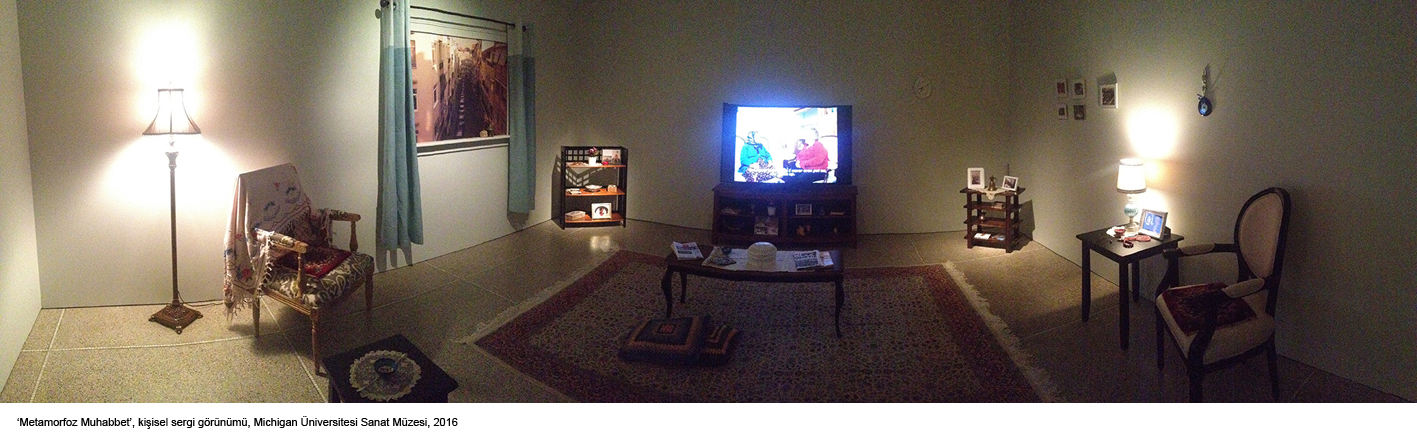
In his video work Metamorphosis Chat, on view at UMMA through March 27, Turkish artist Ferhat Özgür offers a warm and intensely personal experience of what has become a complex moral debate within Turkish culture: wearing the headscarf.  
Tomorrow’s (March 22) discussion 5-7:30 will focus on his work: http://www.umma.museum/programs-and-tours/events/
Colleen: In Metamorphosis Chat, one woman chooses to wear a headscarf, while her friend has chosen to remain uncovered.  Do you think that the headscarf necessarily represents traditional times, or do you feel that it has a place in the modern world?
Ferhat: In general we tend to classify people according to their figure & dress. If I consider, in the religious context, the traditional headscarf is used to function as a complementary decorative element of a person’s attire. It was a show of your respect to your values. Additionally, headscarves have often been worn by nobility, regardless of religious background. But one should also consider the fact that there are two controversial varieties of wearing headscarf in terms of their descriptions as well. The first (as a modest adjective) could be ‘headscarf’, which is a sign of adapting or respecting your own tradition, here mainly in a religious content. The other one (as a definite uniform, a symbol or a message) is ‘turban’, which is worn entirely differently to the ‘headscarf’. Here, turban stands as a compulsory fact for women.
I would like to emphasize that the use of the headscarf, in both ways, doesn’t necessarily represent the past. Sometimes the association of the headscarf with religion can be overstated, over emphasized, made symbolic. My mother used to sometimes wear a headscarf but it was there to serve a purpose: for example - to keep the hair out of her eyes or to keep the hair tidy or to cover your head whilst praying, etc. Why is there never the same comment or criticism made about men wearing headgear or hats - e.g. various kinds of caps! Over time both the turban and headscarf have been unfortunately associated with one another as a controversial topic especially in Western modern countries. In this sense, the headscarf could have a place in the modern world but it is inevitable that women with headscarves are subjected to prejudice or discrimination.
Your artwork often deals with the tension between traditional and modern times.  Other than the appearance of women, how have you felt this tension in your life?
I have felt this tension ever since I decided to study art. I grew up in a neighbourhood where there was a big gap between modern and tradition, poor and rich, even left and right - they were all so tangible. Over time it was also touching to witness the ongoing gentrification in our old district that is full of unforgettable memories. Whilst studying art, apart from women rights, domestic violence and political traumas, I became more engaged in interrogating urbanization conflicts. I can say that more than half of my works are based on the realities of our neighbourhood. From there I try to interpret the individual and social stories which are another face of Turkey. Meanwhile, I’m not sure if the tension is between the past and modern times. There were tensions within past societies and also in the present ones. Don’t we all feel tensions? For instance: old versus young; rich versus poor; those who are well fed as opposed to those who are malnourished; migrants and those who are in settled communities. I don’t think we would be ‘humans of the contemporary world’ if we didn’t feel and experience tensions.
The debate over headscarves in university and professional settings has been a hot topic in Turkey as well as other countries such as France and Mexico.  Do you think that the government has the right to make decisions regarding religion, or should these conclusions come from religious authorities? 
I must admit that there were academics who were imprisoned because they did not allow turban wearing students to attend their lessons. In the mid 2000s for instance, when I was the head of the department of painting, I was given an authority by the rectorship to refuse or to banish those wearing turbans from classrooms - which I did not deliberately implement for it was not fair. I believe that in a truly democratic country people should be able to experience freedom and therefore there should be religious tolerance. However, any symbolic ornamentation should not seek to impose itself on other people.  It should not adversely affect the health and safety regulations and it should also allow people total equality for opportunity. Neither should it seek to marginalise people. But, for instance, in my current position in the fine arts faculty what I ask those with turbans on is whether they are sufficiently courageous to draw from live nude models or to analyze nude paintings that might be presented visually?
Your work deals with many controversial subjects. How have Turkish audiences reacted to this?  Have you ever felt that there was a danger in presenting these divisive topics?
Danger - yes! If an artist is true to himself or herself then there must be times when you ‘push the boundaries’ - both your own and those of the audience. Maybe even to make both groups uncomfortable. Art has sometimes got to challenge people rather than always provide the comfort of a 'fireside armchair’! In 2008 when I shot the video ‘It’s Time To Dance Now’, a performance of a young girl in black chador (burka-like dress) dancing to techno music in vivid public domains in Ankara, I was aware of the danger approaching because I had not previously obtained any official permission from the municipality. But I knew that if I ever applied I would most probably be turned down anyway. When shooting the video illegally we were suddenly surrounded by police. Somebody watching us must have reported that there were youngsters insulting Islamic values. According to them any Muslim girl must not be expected to perform this way in public spaces. Police asked for my permit. Despite my convincing explanations we could not continue. But in the following days we finalized it by using other venues outside! What I tried to expose in this work was how to invalidate the adopted conservative approaches towards the ‘turban’ or ‘headscarf’. Furthermore when the video was shown as part of the exhibition it was facing into main street in central Istanbul. Over the course of the two months there was no public reaction!
The actors in your films are often acquaintances or relatives. Did the women in this film have any reservations about participating?   
If they did have reservations they didn’t show it (except for one of Pakize comments). At one level it has the same qualities as a children’s 'make and pretend’ game. Friends/relatives can be the best people to encourage to go 'the extra mile’ but their personal boundaries should always be respected.